OpenClaw PARA skill organizes AI assistant files automatically
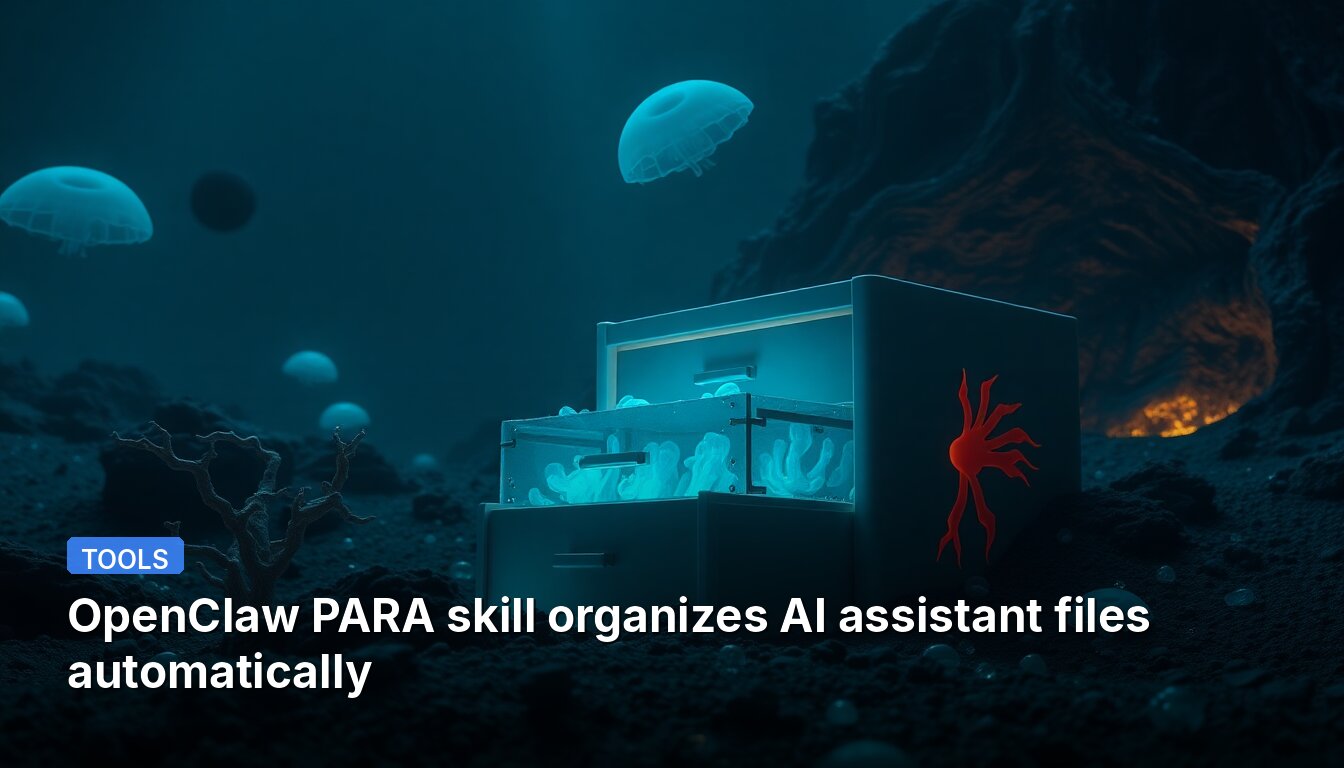
A developer has open-sourced a skill for OpenClaw that forces the AI assistant to organize files using the PARA method instead of creating a disorganized root directory.
What the skill does
The skill implements Tiago Forte's PARA method with four mandatory folders:
- 1-Projects: For active efforts and current bot development
- 2-Areas: For ongoing responsibilities and configurations
- 3-Resources: For reference materials, snippets, and diagrams
- 4-Archives: For completed tasks that don't need daily visibility
The developer reported that before implementing this system, their OpenClaw root directory had "files everywhere, reports mixed with old scripts, zero organization" making it "harder to find things efficiently." After implementing the PARA skill, the agent automatically sorts everything into these four categories instead of dumping files in the root folder.
Availability
The skill is available in two locations:
- GitHub: https://github.com/alitekin1/openclaw-para-skill
- ClawHub: https://clawhub.ai/alitekin1/openclaw-para-skill
The developer notes that implementing this organization system has "made a huge difference in productivity" with the agent becoming "more focused" and the workspace "actually clean for once."
📖 Read the full source: r/clawdbot
👀 See Also
AI Sandbox Manager: LXC-Based Sandbox for Codex with GPU Passthrough and Computer Use on Headless Linux
ai-sandbox-manager is an open-source LXC-based sandbox for Codex agents on headless Linux. It provides GPU passthrough, full sudo access, persistent environments, and computer use via CUA, all while isolating the agent from the host OS.

Building an Autonomous Research Agent with C# and Local LLMs
A C# research agent automates URL processing with local LLMs using Ollama and llama3.1:8b, generating structured markdown reports from web searches.

Tracked 5 Biggest Claude Code SKILL.md Collections on GitHub — Sortable Table with Auto-Refresh
Built a sortable table of the top 5 skill-collection repos (totaling 125k stars) with star counts and skill counts, auto-refreshed by a /workflows:skill-collections command.

Reddit user measures MCP token overhead: 67K tokens consumed before any question
A developer measured their MCP server token overhead at 67,000 tokens consumed before typing a single question, with Playwright MCP using 13,600 tokens and GitHub MCP using 18,000 tokens idle. They replaced MCP with skills and CLI tools for lower context costs.